The National Youth President of the GRCS, Abudi Razak, received the prestigious Henry P. Davison Award for his critical role in climate change projects, the inclusion of minorities in humanitarian action, women in leadership, and other innovative projects.
Recognizing that sustainable impact relies on a vibrant and engaged membership, the GRCS accelerated youth-focused initiatives. The NS developed a National Society Development Policy and a Youth Policy, both designed with strong youth input, including contributions from young law students and young professionals.
The Youth Policy targeted tertiary-level students across universities, technical institutes, and vocational schools, with the aim of retaining them as lifelong contributors to the Red Cross movement. This vision seeks to grow a base of future leaders and professionals like lawyers, health workers, teachers, and engineers, who could contribute not only their time but also their expertise and financial support to the National Society.
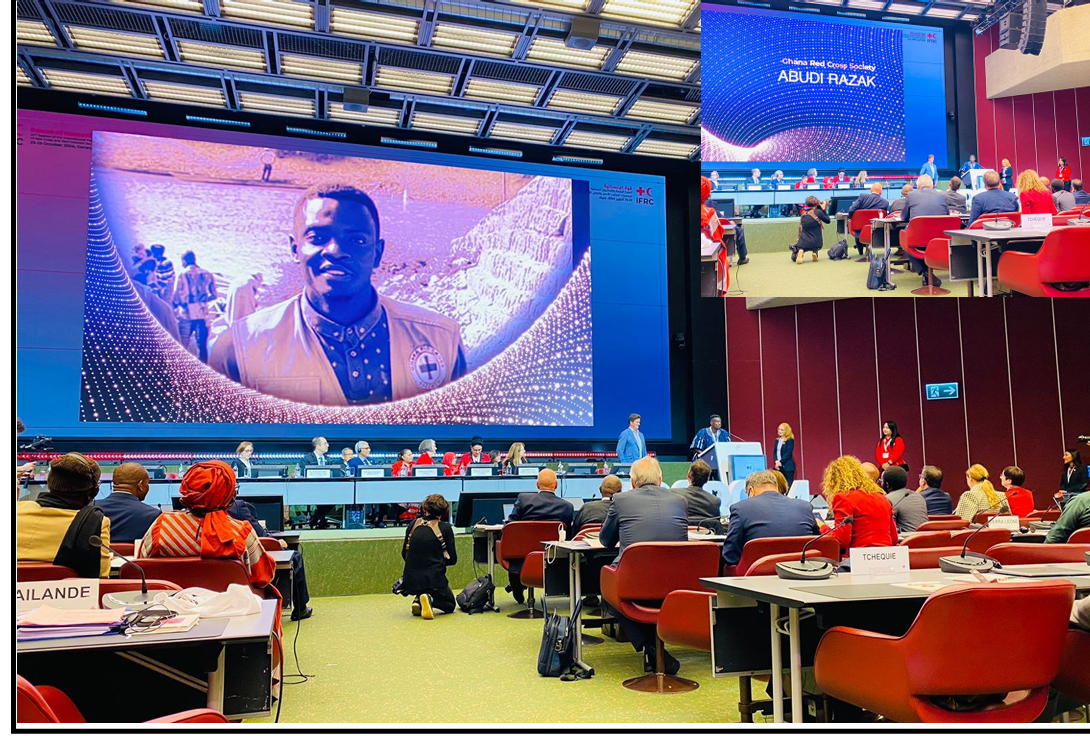
The National Youth President of the GRCS, Abudi Razak, received the prestigious Henry P. Davison Award for his critical role in climate change projects, the inclusion of minorities in humanitarian action, women in leadership, and other innovative projects.
Recognizing that sustainable impact relies on a vibrant and engaged membership, the GRCS accelerated youth-focused initiatives. The NS developed a National Society Development Policy and a Youth Policy, both designed with strong youth input, including contributions from young law students and young professionals.
The Youth Policy targeted tertiary-level students across universities, technical institutes, and vocational schools, with the aim of retaining them as lifelong contributors to the Red Cross movement.
This vision seeks to grow a base of future leaders and professionals like lawyers, health workers, teachers, and engineers, who could contribute not only their time but also their expertise and financial support to the National Society.
As Ghana navigates increasing political polarization and rising regional insecurity due to tensions in neighbouring countries, the Ghana Red Cross Society identified youth engagement as a vital strategy for promoting humanitarian access, peace, and community cohesion.
With approximately 57% of Ghana’s population under the age of 25, the youth demographic presents both a challenge and an opportunity. In 2024, the GRCS launched a targeted youth engagement initiative aimed at building trust, countering misinformation, and deepening understanding of the Red Cross’s principles of neutrality, impartiality, and independence.
The initiative specifically focused on sensitizing politically affiliated youth and Red Cross youth groups nationwide. The initiative yielded tangible benefits: improved community acceptance, increased volunteerism, and enhanced operational security in politically sensitive areas. It also aligned with Ghana’s National Youth Policy (2022–2032), which emphasizes youth involvement in governance, peacebuilding, and development.
Through this approach, the GRCS strengthened its visibility, credibility, and impact, while positioning youth at the heart of humanitarian action and in advance of the 10th Pan African Conference of the Red Cross and Red Crescent which emphasised the strategic role of youth in community engagement, resilience building, and the implementation of safeguarding principles.